

Showing posts with label Sustainability. Show all posts
Showing posts with label Sustainability. Show all posts
Monday, September 19, 2011
Maui Smart Grid Project
The Maui Smart Grid Project will demonstrate and evaluate new technologies that will help residents better manage and reduce energy consumption during periods of high demand, and assist Maui Electric Co. (MECO) to operate the power grid more efficiently. These technologies will also help to restore power outages faster and integrate more renewable energy into Maui’s electricity grid. If you are interested and participating and live in the Maui Meadows please check out: http://www.mauismartgrid.com/
 Resource from: http://www.mauismartgrid.com/

Monday, August 8, 2011
Appropedia: The Sustainability Wiki

Mission: Sharing knowledge to build rich and sustainable lives.
Appropedia is the "Wikipedia" of sustainability. This internationally used site has information on all things sustainable such as detailed descriptions of the different renewable energy technologies, creative new RE inventions, and information on RE projects done all over the world. The name Appropedia comes from the idea of "Appropriate Tehnology". Below is a description of appropriate technology directly from the Appropedia website. Appropedia is a great place to share information and collaborate with others on renewable energy. It's a wiki so it is free to sign up and would be a perfect place to post projects you may have done with your students.
Appropriate technology (AT) is technology that is designed with special consideration to the context of its use - including environmental, ethical, cultural, social, political, and economical aspects of the community it is intended for. With these goals in mind, AT proponents claim their methods require fewer resources, are easier to maintain, and have less of an impact on the environment compared to techniques from mainstream technology, which they contend is wasteful and environmentally polluting.The term is usually used to describe simple technologies proponents consider suitable for use in developing nations or less developed rural areas of industrialized nations. This form of "appropriate technology" usually prefers labor-intensive solutions over capital-intensive ones, although labor-saving devices are also used where this does not mean high capital or maintenance cost. In practice, appropriate technology is often something described as using the simplest level of technology that can effectively achieve the intended purpose in a particular location. In industrialized nations, the term appropriate technology takes a different meaning, often referring to engineering that takes special consideration of its social and environmental ramifications.
Monday, July 11, 2011
Island Energy Inquiry Leadership Seminar

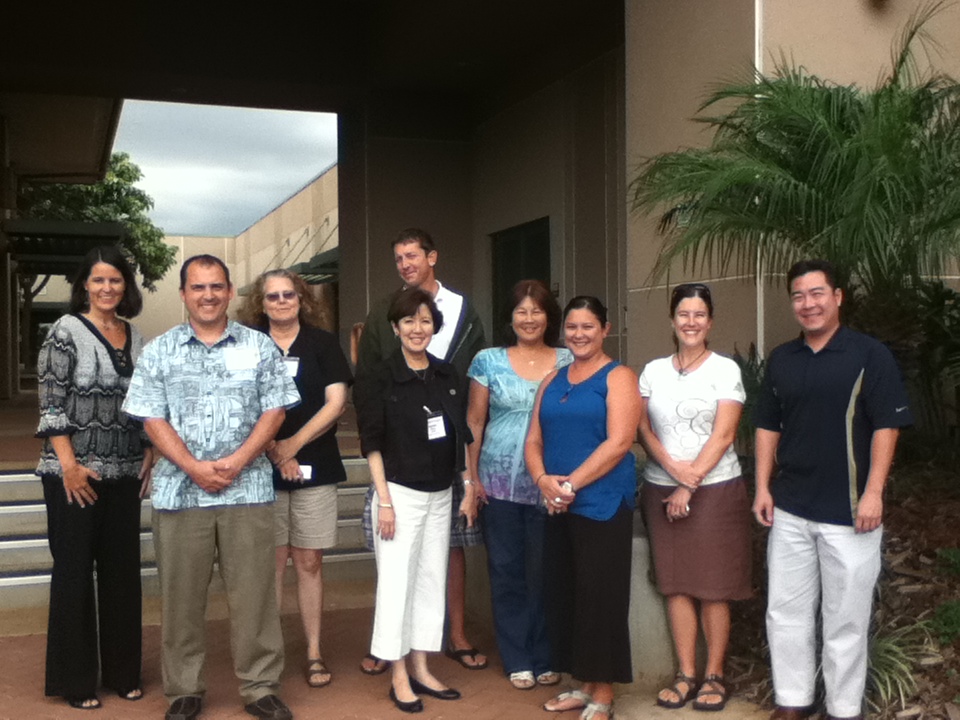
Educators from all over the islands gathered here at our MEDB Lab in Kihei, Maui to learn about and participate in activities related to renewable energy, in hopes of adding these activities to their current curriculum. The Island Energy Inquiry program is led by Diana Papini-Warren, a project manager for Women in Technology and MEDB. This is a compilation of pictures taken by the IEI leaders during the workshop this past June. Each participant was lent their own personal Ipod Touch to take pictures of various renewable energy activities throughout the day. They completed a couple of wind turbine projects and also a solar power activity. Mahalo to Eliza Akana, Ignacio Arcas, Gentry Hirohata, Pam Kohara, Holly Lee, J. Mitchell, Debby Tisdell, and Karen Umeda for participating.
Friday, May 6, 2011
Island Energy Inquiry Leadership Seminar
An Energy Inquiry Event for Education Professionals
For more information contact Diana Papini Warren at diana@medb.org or 808-270-6804
With Science Teacher PD Facilitation Responsibilites
DATES: 6/6, 6/21, 7/19, 8/23 (Hybrid Course)
FACE to FACE: Monday 6/6/11 9:00 a.m. - 4:00 p.m
FACE to FACE: Monday 6/6/11 9:00 a.m. - 4:00 p.m
Malcolm Training Center on the Island of Maui*
MEDB, 1305 North Holopono Street, Suite 5 Kihei, HI 96753
*Travel Stipends Available
MEDB, 1305 North Holopono Street, Suite 5 Kihei, HI 96753
*Travel Stipends Available
ONLINE: 6/21, 7/19, 8/23 3 Tuesdays 4:00 - 5:30 p.m.
Public & Private School Education Professionals Encourged to Apply
***Apply online Today****
Deadline - May 15, 2011
Deadline - May 15, 2011
For more information contact Diana Papini Warren at diana@medb.org or 808-270-6804
Tuesday, March 8, 2011
Clean Energy and GIS Meet!

GIS to help create a smart grid.
EarthSky.org article at:
http://earthsky.org/human-world/bill-meehan-on-using-gis-to-help-create-a-smart-grid-2
http://earthsky.org/human-world/bill-meehan-on-using-gis-to-help-create-a-smart-grid-2
Wednesday, January 5, 2011
Upcountry Sustainability & The Sustainable Living Institute of Maui present: Zero Waste: A Cost Effective and Sustainable Approach for Maui's Future
Jennifer Chirico will present her research on ‘Zero Waste’ and lead a discussion about its possibilities on Maui. The event will be held on January 18, 6pm to 7:30pm, at UH-Maui College, Pilina Building, in the Multi-Purpose Room. The event is free and the public is welcome.
Zero waste programs are the most cost effective ways that local communities can contribute to reducing climate change and the use of landfills, promote local sustainability, protect health, create green jobs, and maximize resources. Zero waste processes guide people in changing their practices to emulate sustainable natural cycles, and create a system where all discarded materials become resources.
Jennifer Chirico is the Executive Director of the Sustainable Living Institute of Maui at UH-Maui College. She is currently completing her PhD in Sustainability, holds a Masters in Environmental Health, and is certified in zero waste. She has been conducting sustainability research for 10 years and providing business consulting to businesses around the world for the last 15 years. For further information, call Melanie at 573-9260
Jennifer Chirico will present her research on ‘Zero Waste’ and lead a discussion about its possibilities on Maui. The event will be held on January 18, 6pm to 7:30pm, at UH-Maui College, Pilina Building, in the Multi-Purpose Room. The event is free and the public is welcome.
Zero waste programs are the most cost effective ways that local communities can contribute to reducing climate change and the use of landfills, promote local sustainability, protect health, create green jobs, and maximize resources. Zero waste processes guide people in changing their practices to emulate sustainable natural cycles, and create a system where all discarded materials become resources.
Jennifer Chirico is the Executive Director of the Sustainable Living Institute of Maui at UH-Maui College. She is currently completing her PhD in Sustainability, holds a Masters in Environmental Health, and is certified in zero waste. She has been conducting sustainability research for 10 years and providing business consulting to businesses around the world for the last 15 years. For further information, call Melanie at 573-9260
Monday, October 25, 2010
The NEED Project – National Energy Education Development
Great Resource for Teachers!
The mission of the NEED Project is to promote an energy conscious and educated society by creating effective networks of students, educators, business, government and community leaders.
Check out http://www.need.org/
Link to PowerPoints and PDF's for teaching renewable energy concepts!
Wednesday, October 20, 2010
Learn about Energy Studies, Rebates and Lighting for Small Businesses
Upcoming event on Maui that which helps support small businesses increase efficiency. For more information check out High Tech Maui at:
http://www.hightechmaui.com/wp/?p=341
To Register Download Flyer:
http://www.hightechmaui.com/pdf/IndustryandManufacturesInvitation.pdf
http://www.hightechmaui.com/wp/?p=341
To Register Download Flyer:
http://www.hightechmaui.com/pdf/IndustryandManufacturesInvitation.pdf
Hawaii Energy

We recently learned how 30% of the 70% Clean Energy by 2030 goal is increasing efficiency. Here is the entity that is taking the lead to help Hawaii achieve that goal.
http://www.hawaiienergy.com/Tuesday, September 14, 2010
Siemens Foundation Sponsors National Sustainability Challenge for Students Grades K-12

Students Teams Compete for Prizes Up to $50,000 Joint Scholarship
Siemens Foundations encourages teams of students to become “Agents of Change” using project-based science inquiry approaches to identify, research and recommend solutions to environmental issues in their communities.
What are some environmental issues in your community that you would like to change?
Wednesday, June 30, 2010
"WindWise" Curriculum Launched

KidWind and Pandion have partnered to develop a wind energy program for educators and schools. Funded by the New York State Energy Research and Development Authority, the program includes curriculum, activity kits, teacher training, and will soon offer a “Connect Zone” where educators can share resources.
http://my.kidwind.org/windwise/curriculum
http://my.kidwind.org/windwise/curriculum
Tuesday, October 13, 2009
Professional Development Opportunity on STEM and Sustainability
Are you and your STEM students interested in offering a Sustainable Technology curriculum?
Are you looking for STEM problem-based learning instructional materials?
If so, read on to learn more about an exciting professional development opportunity.
The New England Board of Higher Education (NEBHE) has been awarded a three-year $900,000 grant from the National Science Foundation (NSF) for a new project titled Problem Based-Learning (PBL) for Sustainable Technology: Increasing the STEM Pipeline. Funding is provided through the NSF’s Advanced Technological Education (ATE) program to improve science, technology, engineering and math (STEM) education to help America develop sustainable technologies.
Participation in the STEM PBL will include:
1) Introduction to STEM PBL two-day professional development on-site workshop during summer 2010.
2) Fifteen-week professional development Introduction to STEM PBL distance-learning course. The course will be divided into three five-week sessions during academic year 2010-2011.
3) Field-testing of two or more STEM PBL Challenges between fall 2010 and spring 2012. A $500 stipend per Challenge (up to $1000) will be paid upon submission of implementation reports.
4) CEU and/or graduate college credit for a fee for successfully completing the distance-learning course.
5) Capstone Showcase workshop during academic year 2011-2112.
NEBHE is recruiting secondary and postsecondary STEM educators to participate in the professional development programs as well as businesses and researchers to collaborate in development of the STEM PBL Challenges.
Projects slots are limited so apply as soon as possible. The application deadline is November 16, 2009. For further information, contact Principal Investigator Fenna Hanes at fhanes@nebhe.org or at 617-357-9620 x129 and visit our website at http://www.stempbl.org/ for applications and more information. Thanks for your interest, Fenna
Are you looking for STEM problem-based learning instructional materials?
If so, read on to learn more about an exciting professional development opportunity.
The New England Board of Higher Education (NEBHE) has been awarded a three-year $900,000 grant from the National Science Foundation (NSF) for a new project titled Problem Based-Learning (PBL) for Sustainable Technology: Increasing the STEM Pipeline. Funding is provided through the NSF’s Advanced Technological Education (ATE) program to improve science, technology, engineering and math (STEM) education to help America develop sustainable technologies.
Participation in the STEM PBL will include:
1) Introduction to STEM PBL two-day professional development on-site workshop during summer 2010.
2) Fifteen-week professional development Introduction to STEM PBL distance-learning course. The course will be divided into three five-week sessions during academic year 2010-2011.
3) Field-testing of two or more STEM PBL Challenges between fall 2010 and spring 2012. A $500 stipend per Challenge (up to $1000) will be paid upon submission of implementation reports.
4) CEU and/or graduate college credit for a fee for successfully completing the distance-learning course.
5) Capstone Showcase workshop during academic year 2011-2112.
NEBHE is recruiting secondary and postsecondary STEM educators to participate in the professional development programs as well as businesses and researchers to collaborate in development of the STEM PBL Challenges.
Projects slots are limited so apply as soon as possible. The application deadline is November 16, 2009. For further information, contact Principal Investigator Fenna Hanes at fhanes@nebhe.org or at 617-357-9620 x129 and visit our website at http://www.stempbl.org/ for applications and more information. Thanks for your interest, Fenna
Subscribe to:
Posts (Atom)