

Showing posts with label Energy Conservation. Show all posts
Showing posts with label Energy Conservation. Show all posts
Monday, September 19, 2011
Maui Smart Grid Project
The Maui Smart Grid Project will demonstrate and evaluate new technologies that will help residents better manage and reduce energy consumption during periods of high demand, and assist Maui Electric Co. (MECO) to operate the power grid more efficiently. These technologies will also help to restore power outages faster and integrate more renewable energy into Maui’s electricity grid. If you are interested and participating and live in the Maui Meadows please check out: http://www.mauismartgrid.com/
 Resource from: http://www.mauismartgrid.com/

Wednesday, September 7, 2011
"Clean Energy: Picking up the Pace in 2011"
Hawaiian Electric Company's latest newsletter featuring updated information on new technologies, customer projects, and the status of the Hawaii Clean Energy Initiative.
"Clean Energy: Picking up the Pace in 2011". Powerlines. Summer 2011.
"Clean Energy: Picking up the Pace in 2011". Powerlines. Summer 2011.
Monday, August 8, 2011
Appropedia: The Sustainability Wiki

Mission: Sharing knowledge to build rich and sustainable lives.
Appropedia is the "Wikipedia" of sustainability. This internationally used site has information on all things sustainable such as detailed descriptions of the different renewable energy technologies, creative new RE inventions, and information on RE projects done all over the world. The name Appropedia comes from the idea of "Appropriate Tehnology". Below is a description of appropriate technology directly from the Appropedia website. Appropedia is a great place to share information and collaborate with others on renewable energy. It's a wiki so it is free to sign up and would be a perfect place to post projects you may have done with your students.
Appropriate technology (AT) is technology that is designed with special consideration to the context of its use - including environmental, ethical, cultural, social, political, and economical aspects of the community it is intended for. With these goals in mind, AT proponents claim their methods require fewer resources, are easier to maintain, and have less of an impact on the environment compared to techniques from mainstream technology, which they contend is wasteful and environmentally polluting.The term is usually used to describe simple technologies proponents consider suitable for use in developing nations or less developed rural areas of industrialized nations. This form of "appropriate technology" usually prefers labor-intensive solutions over capital-intensive ones, although labor-saving devices are also used where this does not mean high capital or maintenance cost. In practice, appropriate technology is often something described as using the simplest level of technology that can effectively achieve the intended purpose in a particular location. In industrialized nations, the term appropriate technology takes a different meaning, often referring to engineering that takes special consideration of its social and environmental ramifications.
Monday, July 11, 2011
Island Energy Inquiry Leadership Seminar

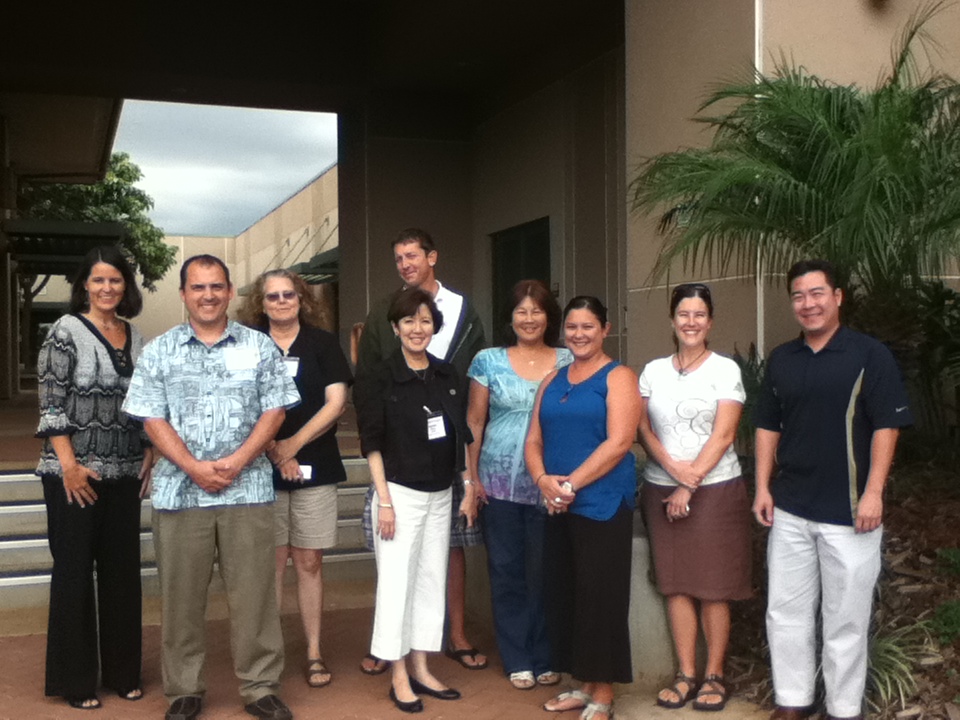
Educators from all over the islands gathered here at our MEDB Lab in Kihei, Maui to learn about and participate in activities related to renewable energy, in hopes of adding these activities to their current curriculum. The Island Energy Inquiry program is led by Diana Papini-Warren, a project manager for Women in Technology and MEDB. This is a compilation of pictures taken by the IEI leaders during the workshop this past June. Each participant was lent their own personal Ipod Touch to take pictures of various renewable energy activities throughout the day. They completed a couple of wind turbine projects and also a solar power activity. Mahalo to Eliza Akana, Ignacio Arcas, Gentry Hirohata, Pam Kohara, Holly Lee, J. Mitchell, Debby Tisdell, and Karen Umeda for participating.
Thursday, June 16, 2011
Island Energy Kit Materials - Where to Buy

Wondering where to buy energy inquiry materials for your classroom?
Here is a list of vendors with contact info and links to their websites.
IEI Vendor List
Here is a list of vendors with contact info and links to their websites.
IEI Vendor List
Friday, June 3, 2011
Hawaii Energy, Toshiba Lighting the Future for Small Business and Non Profits
Small business and nonprofit organizations will soon receive LED lamps at no cost to themselves. Through participation in Hawaii Energy’s Lighting the Future offering, these organizations will save energy and money while helping  Hawai’i to reduce its dependence on imported oil.
“Hawaii Energy is investing in small business and nonprofit energy efficiency with our Lighting the Future offering” said Ray Starling, Hawaii Energy program manager. “This is an exciting opportunity for participants to realize energy savings by making a change to energy efficient LED lighting. We encourage all who qualify to apply!”
Hawaii Energy hopes Lighting the Future will encourage energy conservation and efficiency measures throughout the small business and nonprofit communities. The offering is aimed at providing small businesses and nonprofits exposure to energy-saving LED lighting technology. This offer will be available while supplies last.
Interested small businesses and nonprofits are encouraged to apply as soon as possible.
Through a competitive bidding process, Hawaii Energy selected Toshiba as its partner in providing this offering to qualifying Hawai’i applicants. In its bid, Toshiba provided competitive pricing and a “buy one, get one free” promotional opportunity.
Participants must agree to install the LED lamps prior to June 30, 2011.
Qualifications:
In order to qualify your organization will be a:
1. Small business on an electric utility rate schedule that begins with the letter “G”, for General Service.
2. Nonprofit organization classified as a 501(c) on an electric utility rate schedule that begins with “G” or “J”.
3. For small businesses and nonprofits that do not pay for electricity directly, please call 521-2189 for more information on qualifications and how to apply.
4. Hawaii, Lanai, Maui, Molokai or Oahu commercial electric utility customers.
To find your electric rate schedule look at your electric utility bill or contact Hawaii Energy.
Application Process:
Download the application online at www.hawaiienergy.com.
1. The form must be filled out accurately prior to submission.
2. After submission, applicants will receive a letter of confirmation or contact from a Hawaii Energy representative.
3. Qualifying applicants will receive directions to pick-up locations, many located throughout the state.
Please see Lighting the Future flyer for additional information and FAQs.
For more information, please visit http://www.hawaiienergy.com/.
Hawaii Energy, a ratepayer-funded conservation and efficiency program administered by SAIC under contract with the Hawaii Public Utilities Commission, serves the islands of Hawaii, Lanai, Molokai, and Oahu.
 Hawai’i to reduce its dependence on imported oil.
“Hawaii Energy is investing in small business and nonprofit energy efficiency with our Lighting the Future offering” said Ray Starling, Hawaii Energy program manager. “This is an exciting opportunity for participants to realize energy savings by making a change to energy efficient LED lighting. We encourage all who qualify to apply!”
Hawaii Energy hopes Lighting the Future will encourage energy conservation and efficiency measures throughout the small business and nonprofit communities. The offering is aimed at providing small businesses and nonprofits exposure to energy-saving LED lighting technology. This offer will be available while supplies last.
Interested small businesses and nonprofits are encouraged to apply as soon as possible.
Through a competitive bidding process, Hawaii Energy selected Toshiba as its partner in providing this offering to qualifying Hawai’i applicants. In its bid, Toshiba provided competitive pricing and a “buy one, get one free” promotional opportunity.
Participants must agree to install the LED lamps prior to June 30, 2011.
Qualifications:
In order to qualify your organization will be a:
1. Small business on an electric utility rate schedule that begins with the letter “G”, for General Service.
2. Nonprofit organization classified as a 501(c) on an electric utility rate schedule that begins with “G” or “J”.
3. For small businesses and nonprofits that do not pay for electricity directly, please call 521-2189 for more information on qualifications and how to apply.
4. Hawaii, Lanai, Maui, Molokai or Oahu commercial electric utility customers.
To find your electric rate schedule look at your electric utility bill or contact Hawaii Energy.
Application Process:
Download the application online at www.hawaiienergy.com.
1. The form must be filled out accurately prior to submission.
2. After submission, applicants will receive a letter of confirmation or contact from a Hawaii Energy representative.
3. Qualifying applicants will receive directions to pick-up locations, many located throughout the state.
Please see Lighting the Future flyer for additional information and FAQs.
For more information, please visit http://www.hawaiienergy.com/.
Hawaii Energy, a ratepayer-funded conservation and efficiency program administered by SAIC under contract with the Hawaii Public Utilities Commission, serves the islands of Hawaii, Lanai, Molokai, and Oahu.
Subscribe to:
Posts (Atom)